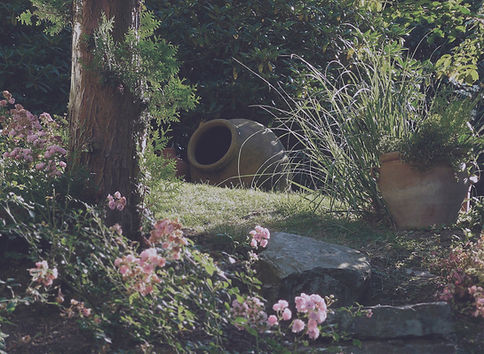
What is the Problem With Curated Lawns?
30-40% of all land is privately owned, and much of that is covered with curated lawns.


Problem 3

Problem 1
The grass has very shallow roots. Thus, while so many areas are experiencing
draught, they require constant watering.
Problem 2
In the competition for a uniform bright green lawn we use excessive amounts of added
nutirents, nitrogen and phosphorus. These chemicals are washed into our lakes, rivers,
well water, and oceans, eating up their oxygen and creating algae blooms and dead
zones. For those who mix baby formula with tainted well water, Blue Baby Syndrome
is the result due to the child being denied oxygen.
Parkinson’s disease has marked a 76% increase since 2021. There are a number of factors contributing this rise, but major among them are links between the disease and exposure to chemicals in pesticides and herbicides. These include the insecticides rotenone and permethrin (which may be found in clothing or nets treated to kill mosquitoes, for example); and the herbicides paraquat and 2,4- dichlorophenoxyacetic acid (2,4-D).*
Commercial farmers have a higher % of Parkinson’s than the general population.
For our lawns to be beautifully weed free, herbicides, like Roundup, notorious for causing follicular lymphoma, are used broadly.
Problem 4
Because of the shallow roots and chemicals, there is little else that can thrive on a manicured lawn, and we further threaten what biodiversity remains.
Problem 5
Lawns provide no food, and no protection to animal and insect life, no welcome to
much needed pollinators, and almost no absorption of carbon.


Bees. Butterflies. Moths. Birds. Pollinators are the beating heart of our food system. One in every three bites of food we eat depends on them, yet, we are losing them. Not by accident, but by design. Decades of pesticide abuse and overuse and genetically engineered (GE) crops coated in
toxic chemicals have poisoned the very
creatures that make life possible.
We have experienced a 75 % decline
in insect populations over the last
three decades.*


Do you remember, as a child, either finding caterpillars fascinating or “gross, don’t get it near me!” What you didn’t know was that these insects, because they have no exoskeleton or bones provide a delicious and digestible meal for young birds. No welcoming environments=no caterpillars=no birds.


Lawns provide no food, and no protection to animal and insect life, no welcome to much needed pollinators, and almost no absorption of carbon. Once the energy expended by mowing, fertilizer use, and watering are taken into account, lawns actually produce more greenhouse gases than they soak up.